Kanazawa is one of my favorite cities in Japan. It’s full of history, culture, beautiful places, and delicious food, yet it hasn’t fallen victim to mass tourism. It’s a city for those who want “Kyoto without the crowds.” In 2025, Lonely Planet included Kanazawa in its list of the best places to travel — another reason to add it to your itinerary.
Below are a few ideas for what to do in the homeland of wealthy samurai, gold leaf, and Japan’s most beautiful garden.
How to get to Kanazawa
From Tokyo to Kanazawa, there is a direct high-speed train, the Hokuriku Shinkansen, which covers 490 kilometers in just 2.5 hours. I usually take it. If you want to save money, there’s the Willer Express night bus. It takes 8-9 hours and costs 2-3 times cheaper than the train.
From the Kansai region (Osaka, Kyoto) – the fastest way is to take the Thunderbird Express with a transfer to Tsuruga Station (about 2 hours). There are also buses: from Osaka – 6 hours, from Kyoto – 4.5 hours.
The nearest airport to Kanazawa is in Komatsu (28 kilometers away). There are regular direct flights from Tokyo, Sapporo and Fukuoka.
READ ALSO: What you need to know about transportation in Japan

Where to stay
It’s possible to visit Kanazawa as a day trip, but I strongly recommend staying at least two days. There’s so much to see and do in the city that you’ll definitely want to linger a bit longer.
It’s convenient to stay near Omicho Market, from where you can easily walk to all the main attractions and Kanazawa Station. Great hotels in Kanazawa: SOKI Kanazawa, HOTEL TORIFITO KANAZAWA, Hotel Kanazawa Zoushi, Forza Kan azawa. You can also stay in a ryokan, a traditional Japanese house. This is an activity that is a must try in Japan. For example, at Kanazawa Chaya or Nakayasu Ryokan.
Best Things to do in Kanazawa
1. Take a stroll through Japan’s most beautiful garden
Kenroku-en Garden is one of Japan’s “Three Great Gardens” (alongside Kairaku-en in Mito and Koraku-en in Okayama). Its name translates as “Garden of Six Attributes,” referring to spaciousness, tranquility, artistry, antiquity, flowing water, and scenic views. The powerful Maeda clan established the garden in the 17th century. Kenroku-en was designed as a strolling garden, where visitors can enjoy picturesque views and changing seasonal beauty from every turn. In spring, you’ll find blooming cherry blossoms of various kinds, while in autumn, the trees are adorned with vibrant red leaves.


A whole army of gardeners keeps Kenroku-en in order. And they do it using old, time-tested methods. For example, they sweep silt from the river stones with a broom, tie bamboo fences together with twine, and even weed the moss by hand!


From November to early March, many trees are wrapped with ropes called yukizuri to protect their branches from heavy snow – a distinctive feature of this region. Each yukizuri consists of about 200 ropes. Of course, this work is done by skilled masters – entirely by hand and without the use of modern technology.


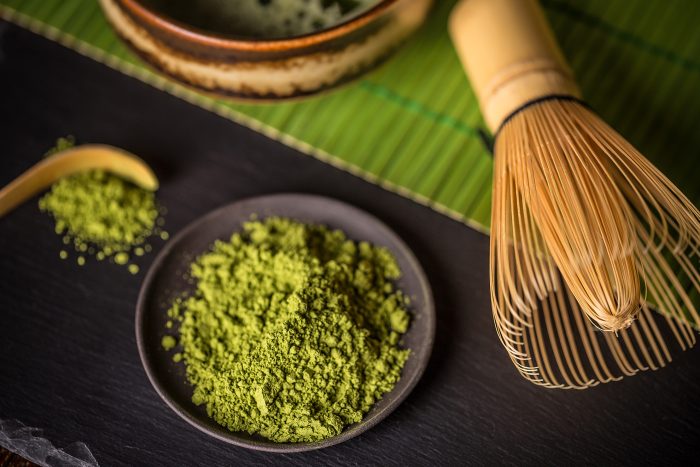
Kenroku-en has several tea houses where you can rest and enjoy a bowl of matcha with traditional sweets: Uchihashi-tei or Miyoshian Suitei, while Shigure-tei requires a reservation.
Tickets for the garden can be purchased from vending machines located at every entrance (cash only). It’s best to arrive early. You can find the garden map at the link.


2. Check out Kanazawa Castle
Kanazawa was founded more than 500 years ago by Ikko Buddhists and served as a religious center. Since the late 16th century and for nearly three centuries, the city was ruled by the samurai of the Maeda clan – the lords of the Kaga domain. The region was famous for its rice harvests, craftsmanship, and trade. The Kaga domain was second only to the Tokugawa shogunate in both size and wealth. During that time, Kanazawa was one of the largest cities in feudal Japan, with a population of around 100,000 people – comparable to Rome and Madrid of the same era.

From 1583 until the end of the Edo period (1868), Kanazawa Castle served as the residence of the powerful Maeda clan. Although much of the castle was destroyed by fire several times, the modern reconstruction still reflects the architecture of feudal Japan. The castle is surrounded by extensive defensive walls and moats, while its numerous gates and turrets were designed to withstand potential attacks – which, in fact, never occurred. The Ishikawa Gate is the only remaining original structure.
Inside, the castle is empty and rather boring, but the grounds around it are beautiful.


One of the fascinating traditions in castle construction was the use of stones brought from various domains within the territory. Each vassal was required to deliver his best stone as a contribution to building the defensive structures. On the surviving castles across Japan, you can still see family crests carved into these stones. Kanazawa Castle is unique because it was built primarily using stones provided by the Maeda family itself, rather than through contributions from their vassals. This independence was a clear symbol of the clan’s immense power and wealth.
When Japan’s feudal system was abolished in 1868, all lands of the Kaga domain were transferred to the new national government. Kanazawa lost its economic power but preserved its historical heritage. Today, the city is home to about 500,000 people.
READ MORE: Himeji White Heron Castle in Japan

3. Change into a kimono
If you’ve been planning to rent a kimono and walk around in it during your trip to Japan, Kanazawa is one of the best places to do so. First, there are far fewer tourists here, and second, there are plenty of atmospheric photo spots.
If you want to spend the whole day in a kimono, bring a change of shoes – you won’t get far in geta (traditional wooden sandals), as they’re quite uncomfortable. Dressing in a kimono with a traditional hairstyle usually takes about 30–40 minutes, so make sure to book in advance!
Where to rent a kimono in Kanazawa:
- Kimono Akari – closer to the station. Official Website.
- Kimono Tsubaki – in the Higashi tea district. Official Website.
- VASARA Kimono Rental – by Kenroku-en Garden. Official Website.
On average, kimono rentals start at ¥3,500 for a few hours.


4. Step back in time as you wander through Kanazawa’s historic teahouse districts.
In the past, Kanazawa was filled with teahouses where geisha entertained guests with dance and music. In 1820, all the buildings were relocated to three districts: Higashi, Kazuemachi, and Nishi. Across all of Japan, only two teahouse districts are officially recognized as cultural heritage sites – Gion in Kyoto and Kazuemachi in Kanazawa.
Kazuemachi is quite small, while Higashi offers more space to explore. Take a walk through the Edo-period streets and don’t hesitate to check out many charming little shops along the way.


Kanazawa is Japan’s main supplier of gold leaf. You can find plates, jewelry and even cosmetics with gold in Higashi souvenir shops. My favorite store is KINKA. You can try the gold ice cream at the cafe.
READ ALSO: 10 Kyoto places every traveler should see


5. Make your own golden chopsticks.
Kanazawa means “golden swamp”. There are legends about a peasant who found gold in the local swamp. No wonder Kanazawa has been Japan’s main supplier of gold leaf for 400 years! It is actively used to cover jewelry, statues and temples. The process of producing golden leaf is very complex, requiring special temperature and humidity levels. Kanazawa has just such ideal conditions and is a monopolist. 99% of all golden leaf in Japan comes from Kanazawa.
I highly recommend booking a gold leafworkshop at one of the oldest companies, Sakuda. You can choose to decorate mirrors, plates and chopsticks with gold leaf. The master tells you and shows you how to do it properly. Book the class in advance by mail, payment in cash on the spot. It’s a fun, affordable experience – and you’ll end up with a golden souvenir made by your own hands. Don’t miss the famous golden toilet on the second floor of the shop building!


6. Attend a geisha performance
In Higashi, real geisha still live and perform today. The experience is quite expensive, but it remains very popular. Tickets for geisha performances must be booked well in advance.
The geisha performance at Kaikaro Tea House is held in Kanazawa’s historic Higashi district. I was only able to attend it on my third visit to the city. While it’s not a traditional private evening with geisha, it’s equally fascinating and informative. There are only about 30 geisha left in Kanazawa, so it’s a rare opportunity to see several of them perform. Don’t hesitate to splurge – meeting geisha in Kyoto costs several times more and is much harder to arrange. By the way, Kaikaro is the largest teahouse in Kanazawa, and it features a tea room entirely decorated in gold.
Pro tip: if you want to save some money, “standing” tickets are released on the website on the day of the performance at a discounted price — though availability isn’t guaranteed.
READ MORE: 27 Ways to Save Money in Japan


7. Sample the freshest seafood at Omicho Market.
Kanazawa is located close to the sea, and for over 300 years, the Omicho Market has been selling the freshest seafood in the region. Stop by one of the small restaurants and order a mixed seafood bowl. Known as “Kanazawa’s Kitchen,” this market is a fantastic place to try something new — like sea urchin, for example.
Stroll along the market’s main alley and take a look at what’s on display. Seasonal products are always the most delicious: starting September 1, it’s the season for large, sweet amaebi shrimp; from November, you’ll find snow crab and sea cucumber; and in spring, Japanese barracuda and the local transparent fish called isaza.


8. Find the most beautiful house in the Samurai neighborhood
Kanazawa has preserved its own samurai district – Nagamachi. It was home to members of the middle and upper ranks. Nagamachi literally means “long city”. Here you’ll find narrow streets, earthen walls, and restored samurai residences.


The winding alleys of Nagamachi were designed to make it difficult for intruders to move through the district. The clay walls provided both protection and privacy for the samurai homes.


Several traditional samurai houses in Nagamachi have been preserved and restored. The most famous one


9. Admire the ninja arsenal at the museum
The Ninja Weapon Museum is a wonderful small museum in Kanazawa, perfect for a family visit. It features informative displays, as well as exhibits of samurai and ninja weapons. The highlight of the visit is trying your hand at throwing shuriken (ninja stars) — a fun and interactive experience for both kids and adults.
Ninjas were secret agents and mercenaries skilled in espionage and sabotage. Most came from the lower classes, though some were disgraced former samurai. It’s well known that ninjas played an important role in Japanese history.
The museum staff speaks English, tickets are available at the entrance. There is a small souvenir store.

10. Go to Shirakawa-go village
Shirakawa-go is an ancient mountain village once home to silk farmers. For a long time, the area was difficult to access, which helped it preserve its traditional charm. Locals built houses with enormous triangular thatched roofs, where silkworms were raised in the attic. This unique Japanese architectural style is called gasshō-zukuri.
Since 1995, the village has been a UNESCO World Heritage Site. Today, silkworms are no longer raised here, and many of the traditional houses have been turned into souvenir shops, inns, and small stores for visitors. Still, it remains one of Japan’s must-see destinations. In 2025, Shirakawa-go was named among the world’s Top 10 Most Beautiful Villages.
It’s only an hour and a half bus ride from Kanazawa. Read more about Shirakawa-go in this article.
Download: A detailed itinerary of Japan in 2 weeks


What else is there to do in Kanazawa
Take an electric bike ride to the ninja temple, Myoryuji.
Admire contemporary art at the Ishikawa Prefectural Museum of Art. Inside, there is a café with delicious desserts – Le Musée de H Kanazawa.
Cook Japanese dishes at the master class and dive into the secrets of delicious Japanese cuisine.
Make yourself a unique souvenir – a ring from Kanazawa.
Take a guided walk around the city and learn a lot of interesting things.